Best Rank and Rent Niches: How to Pick a Market You Can Win
What makes a niche rentable, eleven proven service categories with real lead values, the niches to avoid, and the one-afternoon validation that prevents a wasted build.

You know how most rank and rent advice jumps straight to content creation and backlinks? The uncomfortable truth is that the site is usually won or lost before a single page gets built.
Your niche choice locks in your lead value, sets your competition level, and controls how fast a local business agrees to rent the site. Get it wrong, and no amount of on-page optimization will save you.
That is why the real work happens up front.
The city matters just as much as the niche. A roofing site in a small town produces very different lead value than the same site in a major metro, so you evaluate the pair together, not the niche alone.
Here is the plan. This guide walks through what makes a niche rentable, a ranked table of proven service categories with real numbers, the niches to skip, how to match a niche to the right city, and a validation framework you can run in one afternoon before you commit to a build.
Key takeaways
- Rentable niches need four things: job values above roughly $200, urgent demand, enough monthly searches in one city, and weak incumbent websites.
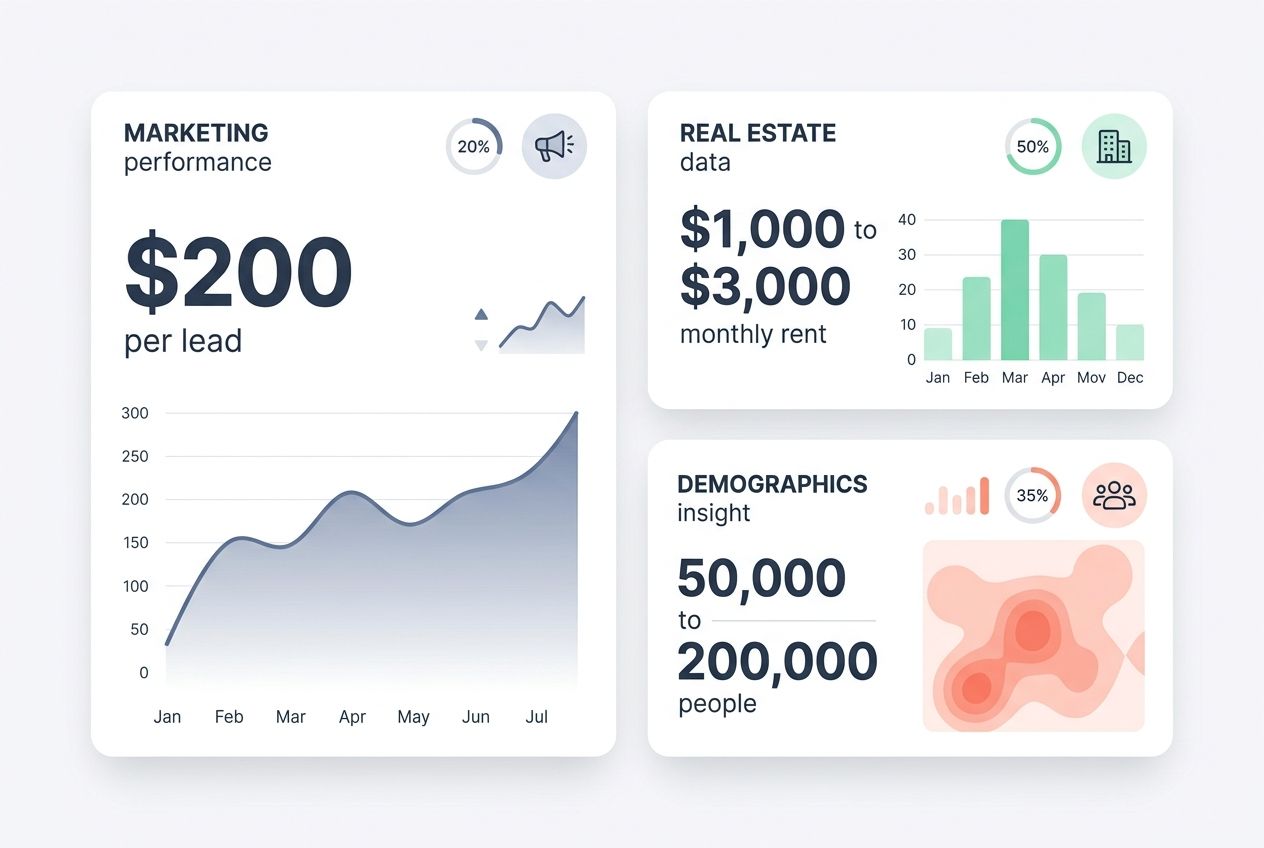
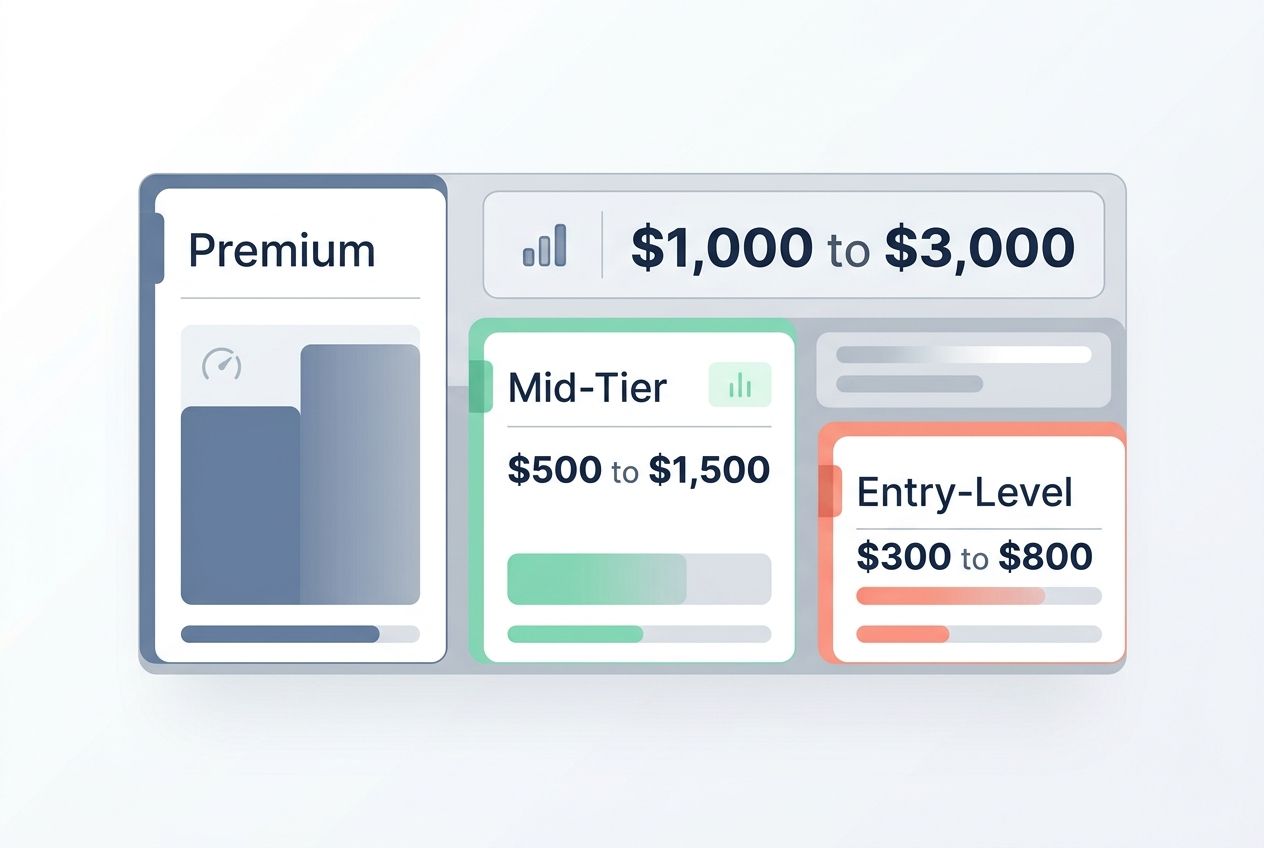
- Premium trades like water damage restoration and roofing rent for $1,000 to $3,000 monthly, mid-tier trades like HVAC and plumbing for $500 to $1,500, entry-level services for $300 to $800.
- Cities between 50,000 and 200,000 people are the working band for a first site: enough demand to matter, weak enough competition to win.
- Avoid regulated professions, jobs under $100, saturated metros, pure-seasonal niches, and anything you cannot pitch to a renter in one sentence.
- Validate before building: read the current top ten, confirm businesses run ads, check CPC data, and call two or three businesses about what a customer is worth.
What makes a niche rentable
A rentable niche has to pass four tests. Miss any one of them and you are building a site nobody will pay for.
- Job value above roughly $200 per job. The business needs to afford your rent and still profit comfortably.
- Urgent or emergency demand. People searching for a locksmith or garage door repair need help now, which pushes conversion well above casual browsing.
- Enough monthly search volume in your chosen city. A niche with fifty searches a month never produces consistent lead flow.
- Weak incumbent websites. You want markets where the current top ten lacks depth, giving a new site room to rank.
The underlying math is simple: your renter must generate several times what they pay you each month. If you charge $500, the leads should produce at least $1,500 to $2,000 in revenue for their business. That margin protects them against lead waste and keeps your deal attractive.
Here is the practical context behind the $200 threshold. Per a February 2026 Local Services Ads spend analysis covering 888 home-service accounts, reported through Booked Friday and Valley Marketing Group benchmarking, the average LSA cost per lead is about $53 across $6.72 million in observed spend, with most core trades landing between $30 and $80 and roofing running higher. Local businesses already pay those rates. Your site only becomes attractive when the job value comfortably clears that acquisition cost with room for your rent on top.
One operator built a single-service HVAC site in a mid-size suburb of 85,000 people after applying the four criteria. After ten weeks of content and local citations, the site generated 18 phone leads and 7 form submissions. Calls to three local HVAC businesses revealed an average per-lead revenue of $320. The operator offered the site to one renter and secured a $600 monthly exclusive rental. The four criteria kept the build lean and rentable within three months.
The best rank and rent niches
Eleven service categories that consistently support the model, with conservative market figures:
| Niche | Typical job value | Per-lead value (shared / exclusive) | Urgency | Competition notes |
|---|---|---|---|---|
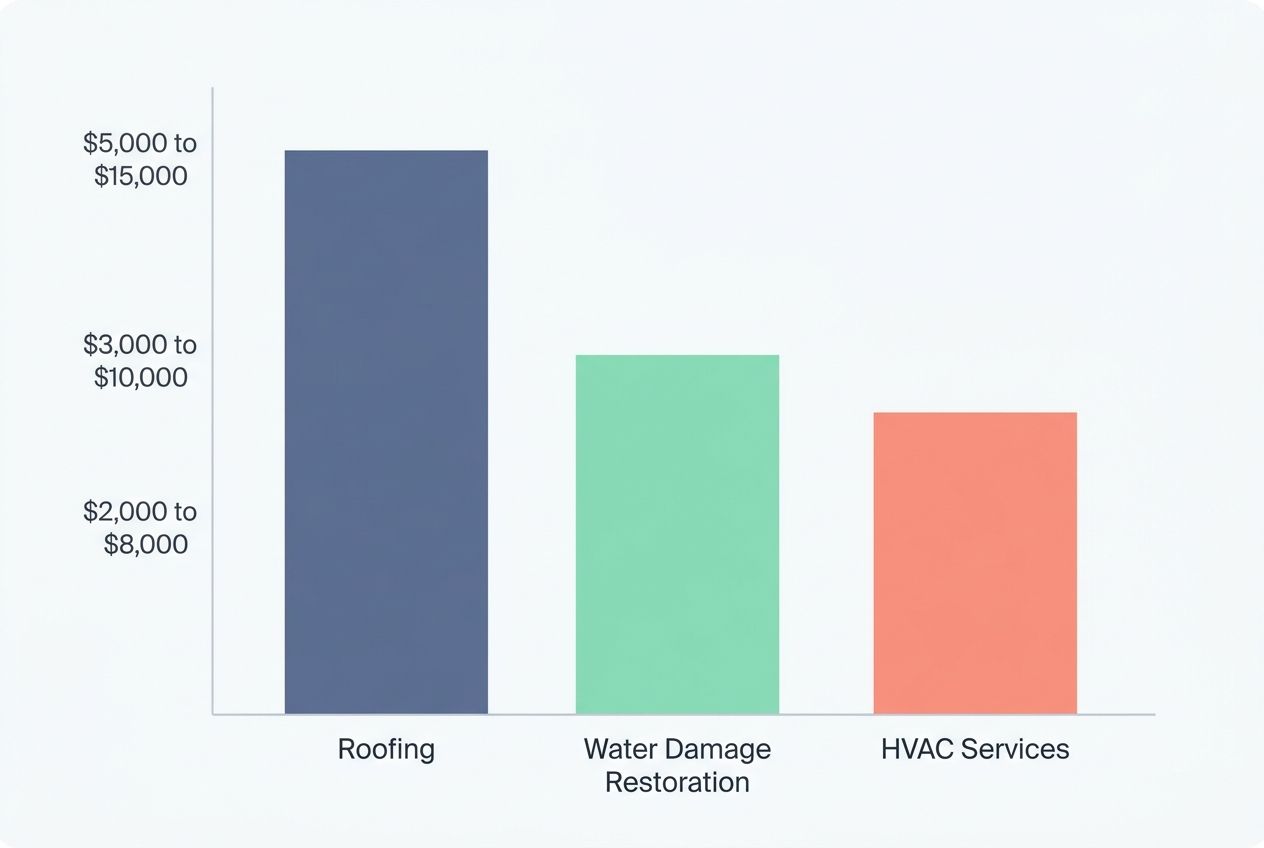
| Roofing | $5,000 to $15,000 | $40-120 / $120-360 | High | Established demand, worth the contest in mid-size cities |
| Water damage restoration | $3,000 to $10,000 | $50-150 / $150-450 | Critical | Emergency-driven, thin competition off-peak |
| HVAC | $2,000 to $8,000 | $35-100 / $105-300 | High | Seasonal spikes, moderate competition |
| Plumbing | $500 to $5,000 | $30-90 / $90-270 | High | Specific jobs outrank generic plumbing pages |
| Towing | $100 to $500 | $20-60 / $60-180 | Critical | Low competition, call-driven |
| Junk removal | $300 to $2,000 | $25-75 / $75-225 | Medium | Steady demand, spring and fall peaks |
| Tree service | $1,000 to $5,000 | $40-110 / $120-330 | Medium-high | Storm cleanup creates demand spikes |
| Garage door repair | $200 to $1,500 | $20-65 / $60-195 | High | Quick jobs, consistent year-round |
| Pest control | $300 to $1,200 | $25-80 / $75-240 | Medium | Recurring service model |
| Concrete and paving | $2,000 to $10,000 | $45-120 / $135-360 | Medium | Project-based, tougher in metros |
| Appliance repair | $200 to $800 | $20-60 / $60-180 | High | Repeat-customer potential |
Niches to avoid and why
Knowing what to skip saves more money than knowing what to build.
Regulated professions and low-ticket services
Regulated professions like law and medicine carry licensing rules and referral-fee restrictions that make lead generation legally delicate, and the legality guide covers exactly why they are a bad first niche. Skip them until you have experience in simpler trades.
Low-ticket services under $100 create a math problem that never resolves. Lawn mowing alone and low-ticket cleaning generate traffic but never enough margin to justify ranking and renting the site.

The paid-ad data makes the gap concrete. Per the same 2026 LSA trade-by-trade benchmarking, junk removal and similar entry-level services run about $5 to $30 per lead, versus roughly $57 for plumbing. That is a 2x to 10x gap in what businesses will pay, which is why low-ticket sites need volume across multiple cities instead of one strong exclusive rental.
Saturated markets and seasonal traps
Saturated metro trades with established competitors holding the rankings demand enormous resources to displace. Target secondary markets instead, where competition stays manageable and traction comes faster.
Pure seasonal niches like snow removal or holiday lighting fail as standalone sites: zero revenue during off-months, dead inventory, no cash flow. Combine seasonal offerings with year-round services, or skip seasonal-only plays.
Niches without a clear pitch
If you cannot pitch the niche to a renter in one sentence, that signals deeper problems with lead value or rental appeal. Overly broad service areas rank harder and rent worse, because search engines and renters both reward focus.
The same warning applies to building lead factories with no identity: thin sites across dozens of niches attract neither rankings nor quality renters. One deep site in one validated niche beats ten shallow ones, every time.
The city matters as much as the niche
A plumbing site ranks comfortably in a mid-sized town of 75,000 people and faces crushing competition in New York City. Evaluate the pair together.
Markets between 50,000 and 200,000 people are the sweet spot for a first site: enough monthly demand to sustain lead flow, weak enough incumbents to outrank. The same niche performs brilliantly in one location and becomes unwinnable in the next.
The fastest check costs nothing. Search the niche plus city in Google and read the top ten:
- Count genuine deep sites with real content versus thin directories and low-effort pages.
- Mostly thin pages and outdated directories: you found an opportunity.
- Strong local service sites holding the rankings: that city is a losing battle, move on.

One operator audited garage door repair in a coastal town of 62,000 people this way. The top ten held 4 thin directory pages, 3 local businesses with content under 600 words, 2 PPC advertisers, and 1 national aggregator. Only 2 of the 5 local businesses had verified business profiles. Estimated monthly search volume reached 260 queries, projecting 6 to 10 rentable leads per month. Most results were thin, and that mix signals a realistic path to outrank incumbents in a town of this size.
Before you build, confirm three things about the city: enough population and demand, active local businesses that could rent the site, and competition weak enough for a realistic path to the top. The multi-city expansion play comes later, after one market proves out.
How to validate a niche before building
An afternoon of validation prevents a wasted three-month build.

- Read the current top ten for your niche plus city and judge content depth. Shallow competitors signal an easier climb.
- Confirm businesses run paid ads in the niche. Active ad spend proves they pay for customer acquisition and will pay for leads.
- Pull search volume and CPC data from keyword tools like Google Keyword Planner, Ahrefs, or Semrush. High CPC means businesses value the click.
- Call two or three businesses and ask what a new customer is worth to them. Their answers set the lead value you can charge.
- Check marketplace lead rates for the trade on platforms like Angi and HomeAdvisor to anchor realistic pricing.
- Count candidate renters. At least five to seven potential renters in the city, so one refusal does not strand the site.
- Confirm domain availability for a name that reflects the niche clearly.
- Check business profile verification requirements for the niche and location before you build, not after.
That last item deserves specifics, because verification has gotten stricter. Per Google's Business Profile documentation and 2026 verification guides from JXT Group and Wiremo, Google increasingly requires video verification recorded live in the Google Maps app: at least 30 seconds, unedited, no voices, showing the physical location, signage, and workspace, with review taking up to five business days. Knowing the exact filming conditions before you build avoids failed attempts that stall a launch. Organic-first sites without a profile sidestep this entirely.
One operator compared two niches in the same rust-belt suburb of 140,000 people using CPC, caller interviews, and competitor depth checks. Both plumbing and junk removal looked promising on volume alone. After validation, plumbing showed an average CPC of $7.20, 4 active PPC advertisers, and 9 potential renters. Junk removal showed a $0.95 CPC, 1 advertiser, and 3 potential renters. The operator pursued plumbing and reached first rental in 11 weeks at $750 monthly. Volume alone nearly misled the decision; validation turned a false positive into a clear call.
Service site or directory: which fits the niche
Your niche's structure decides the asset type.
| Factor | Service site | Directory |
|---|---|---|
| Best fit | High-urgency emergency trades | Markets with many comparable providers |
| Speed to rank and monetize | Faster | Slower |
| Renter risk | One renter, concentrated | Multiple payers, distributed |
| Management load | One strong renter relationship | Recruit and manage many listings |
Directories fit niches where customers compare options: contractors, home services, professional services. Multiple businesses pay for placement, so one leaving dents revenue instead of zeroing it. They take longer to build and rank, and the directory build guide covers the mechanics, including scheduled listing refreshes that keep the site current without manual upkeep.
Match urgency to asset type: emergency trades favor service sites, comparison-shopping niches favor directories. The site examples breakdown shows both archetypes dissected page by page.
Matching the niche to lead value
The tier view ties it all together:
| Tier | Example trades | Monthly rent range | Time to first rental |
|---|---|---|---|
| Premium | Water damage restoration, roofing, concrete and paving | $1,000 to $3,000 | 3.5 to 5 months |
| Mid-tier | HVAC, plumbing, garage door repair, electrical | $500 to $1,500 | 3 to 4 months |
| Entry-level | Junk removal, landscaping, cleaning, handyman | $300 to $800 | 2.5 to 3.5 months |
Conclusion
The decision sequence is exact. Evaluate the niche against the four criteria: job value, urgency, search volume, incumbent weakness. Validate the specific city with the afternoon checklist. Then build with real depth.
Niche selection determines everything downstream, so apply the filters before committing resources, not after. For the full end-to-end process from build through lead delivery and renter retention, see the complete rank and rent guide.
FAQs
What makes a niche a good fit for rank and rent?
Local demand above roughly 500 monthly searches, a job value above $200, urgent intent, and fewer than three genuinely strong sites on page one. All four together mean a new deep site can rank and a business will pay for what it captures.
Is real estate still profitable for rank and rent?
Yes, for specialists. Motivated-seller leads sell for $50 to $200 in US metros, and a site targeting "we buy houses" searches in one city outperforms a broad portal because those leads convert at higher rates and buyers pay for exclusivity.
Can AI tools speed up niche research and site building?
Substantially. AI analysis compresses competitor research from days to minutes, and generating the site from a business factsheet turns the build itself from weeks into days, which changes how many niches an operator can realistically test.
Should I pick e-commerce or local services for a first project?
Local services. A plumber or roofer site in a mid-sized US city typically produces leads within 60 to 90 days, while e-commerce demands inventory, fulfillment, and national competition that makes renting the asset much harder.
Ready to build a rank-ready site?
Get 30+ pages, auto-applied images, and full SEO setup in minutes.
Get started