The directory website builder
that ranks, gets cited, and captures leads.
Pick a niche and a city. The engine builds a directory with real editorial depth: review analysis on every business, buyer guides written by a named expert, a published ranking methodology, and a resources library worth linking to. It ships as a static site with lead capture wired to your LocusPilot inbox, grows every refresh cycle, and hands you a list of businesses in the niche that need a website.
First directory free on any paid plan from $29/mo · Price shown before you build
Built by this engine, live right now.
Directories we run ourselves. Click through to the review analysis, the guides, the methodology and the best-of rankings. Everything on them is engine-generated.

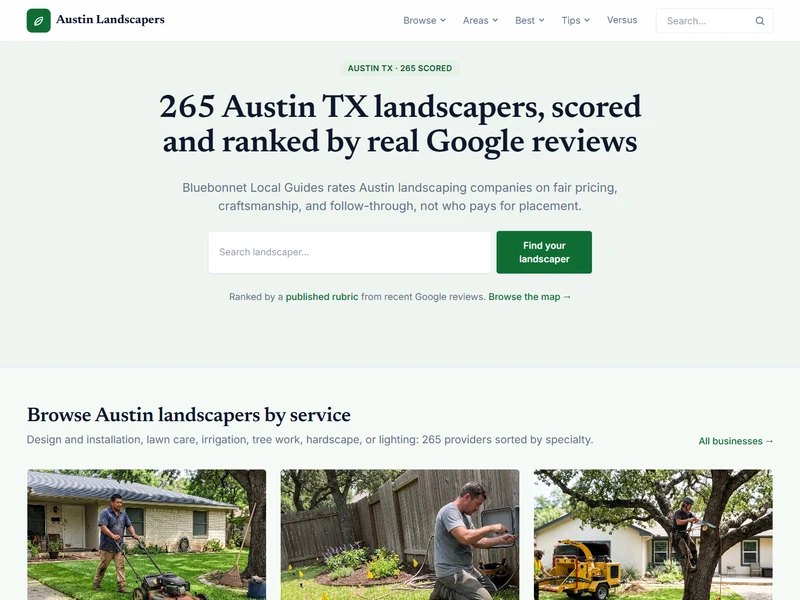
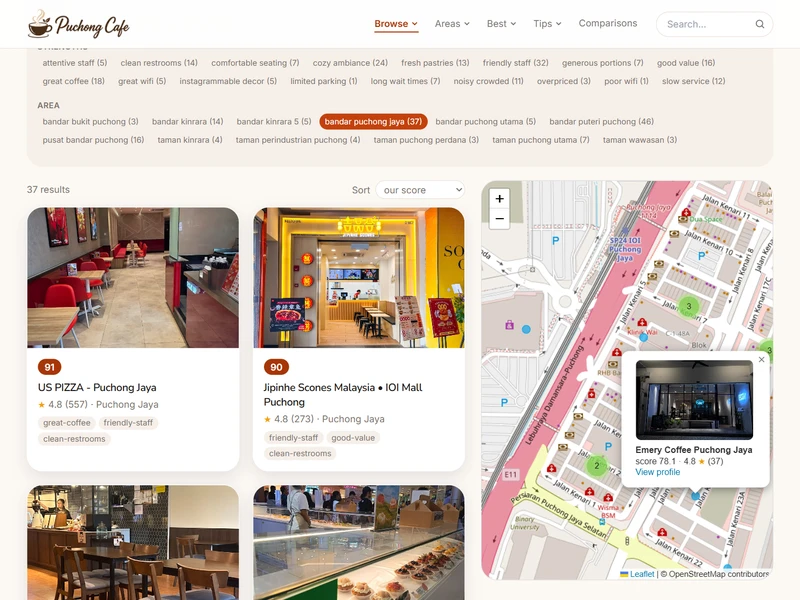
A directory we built, 17 days after launch
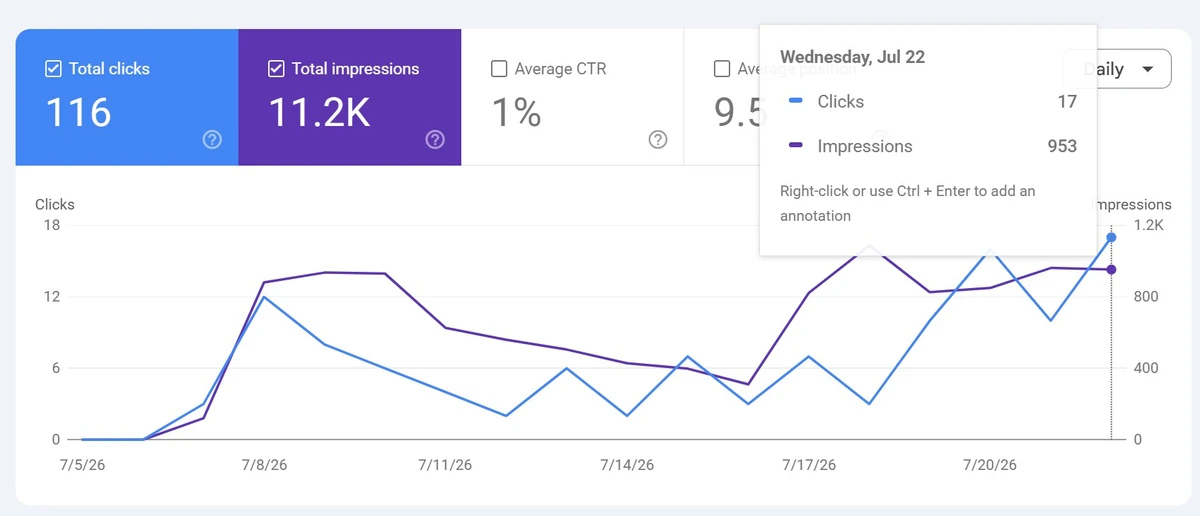
116 clicks. 11,200 impressions. Average position 9.5. Small numbers, and we are showing them anyway, because the interesting part is the shape. Impressions climbed to about 900 by 8 July, slid to roughly 350 by the 15th, then recovered past 950 by the 22nd, which is the last day on the chart.
1% CTR is low. Seventeen days proves nothing about whether it holds. The real test is day 90.
What operators say after they have shipped one
I highly recommend Locuspilot. I was able to create a beautiful 60+ page SEO optimized website for my business in one day! The platform is slick and the support is awesome.
 Joseph S., Fly Spectra
I've been trying out the new directory engine that was launched last week. So far it looks really good and has a lot of potential
 Sean T.
Thanks for all support, incredible! The service is not cheap paying in Brazilian Reais (not saying not worth it!) but the experience was flawlessly and if happens to work well, Ill be a client for sure.
 Alexandre Venturin, AXVT Marketing
I am happy with the way everything looks on spanishforkweddinginvitations.com. I was a little surprised that this site migrated to my cloudflare hosting account without me having to do very much.
 Dan Barton
We use LocusPilot to quickly deploy new sites on EMDs we secure for both our own projects and client sites and really like the tool. Many great features for us SEOs and Adam is the most responsive guy you will ever find. Cannot wait to test the directory add-on!
 Dorian Menard, Search Scope
The neighborhood pages, the stat block showing 1,968 businesses reviewed against 255 actually listed, the editor bio doing genuine trust work instead of sitting there as filler. That's a directory built by someone who has run one. Most tools in this space ship a listings dump and call it a product. Yours isn't that, and it shows.
Just built my first directory. Looks great and was easy to get going.
Wow - you guys are on top of things - love it - thanks so much! You're the best
 Christian M., CEO, Lovepixel Agency
This is great btw you are already way ahead of my other directory its crazy.
Priced and sized before you commit.
Three steps from an empty niche to a live directory with lead capture running.
Pick a niche and a place
Any of 4,274 Google Business categories, any city. The wizard runs a live count and shows the exact credit price before you spend anything.
- Dynamic AI niche configuration, no fixed template list
- Live listing-count estimate for your exact scope
- Exact credit price up front
The engine builds
Discovery, review analysis, scoring, then the editorial spine: best-of pages, comparisons, guides, glossary and resources. Five design presets plus your brand tokens and logo, with a design-QA gate so your directories don't share a template footprint.
- Methodology, best-of, comparisons, guides, glossary, resources
- A named expert author on the guide library
- Depth floors gate every page it mints
You stay the editor
Edit any page's content and SEO fields, the guides, and your author persona from the dashboard. Enable or disable any listing. Every edit survives the monthly refresh. Connect a custom domain when you're ready.
- Page content, guides, and author persona, all editable
- Edits survive every refresh cycle
- Custom domain, with sites kept private until it is live
Data, content, and
the money layer.
The listings are the spine. On top of them the engine builds an analysis layer, a content-authority layer, and a lead layer you own.
Review intelligence, not star averages
The AI reads each business's recent reviews and writes the synthesis: overall sentiment, recurring praise, recurring watch-outs, who it's best for and who should look elsewhere, with sentiment broken out per service. Thin-review listings say "based on limited reviews" instead of inventing.
Rankings on a published methodology
Every score comes from a public rubric: sentiment, rating, review volume, recency and profile completeness. By default sentiment weighs heaviest at 28%, and you can move any weight with a slider or a preset like Most reviewed. Bayesian math stops a 5.0 from 4 reviews beating a 4.8 from 400. The methodology page ships on every directory with the live weights, and every scored page links to it.
A buyer-journey guide library
An AI plans the guide topics around how people actually research the niche: cost, process, DIY-vs-pro, what to watch for. Each guide is FAQ-backed, carries a table or an image, and is dated honestly. The library grows on each refresh.
A named expert author on every guide
Each directory has its own expert persona with a name, role and bio, rendered as the guide byline, an about-the-editor block, and Person schema. The E-E-A-T signal a bare listing site can't produce.
A glossary and a resources hub
20 to 30 defined terms with DefinedTerm schema, plus a hub of real, named local organisations, each grounded to a real source. Both built to be cited by AI answers, neither ever inventing a contact.
Lead capture you own
A quote form on every listing and a site-wide quote funnel, feeding your LocusPilot inbox with per-listing attribution and CTA tracking. Service pages turn the directory's traffic into enquiries tagged by source, without touching the neutral listing data.
Shaped to be quoted by AI answers
When someone asks an assistant for the best option in town, the answer is assembled from pages structured to be quoted. Every page ships a full JSON-LD graph, a stable entity graph, llms.txt with a named publisher, and only earned rankings in the schema.
Pages that would be thin are never built.
The engine only mints a page when it clears a depth floor of real businesses and adds something the others don't. That discipline is the product, not a setting you can turn off.
Depth floors gate every page
A category hub, best-of or city page exists only when there are enough real businesses to make it useful. A business with too little to say gets a genuine profile built from its own website, or no standalone page. There is no boilerplate third option.
Calculated-unique on every page
Numbers no other site publishes, computed deterministically per directory: how a rating sits against the category average, where a listing lands on review-volume percentile, per-city stats that differ from town to town.
Grounded, never invented
Content is written from evidence: reviews, the business's own site, verified local sources. Website facts are attributed and marked not independently verified. A lint blocks template-sounding prose before anything ships.
A directory that proves it's alive.
Ghost listings are the quiet failure of every old directory. This one puts a date on it.
One directory, five ways it pays.
A directory is a lead engine for a whole niche in a city. You own the traffic and the relationship with every business on it.
Sell the lead flow
Every listing carries a quote form wired to your LocusPilot inbox, attributed per listing. Calls, WhatsApp taps and website clicks are tracked with visitor geo, so you know exactly which page produced each lead. Sell them per lead or on retainer; the attribution is your proof.
Leads land in your inbox from the day the directory goes live.
Sell the AI visibility
Ask ChatGPT or Perplexity for the best dentist in a city and the answer is assembled from data-packed best-of lists and comparison pages. That is exactly the shape every ranking page here ships in: entity graph, earned-only schema, dated quotable claims. The buyers those answers send arrive through your quote funnel, so the citation traffic becomes lead flow you already sell. Next up: businesses that want a spot in the AI answer pay you for a reviewed comparison or best-of feature, labelled sponsored, never a ranking position.
A business can't publish a credible "best in town" list naming itself. Your directory can, and that neutrality is what AI engines reward.
Sell featured placement
Featured slots sold on your own terms: you invoice the business directly and set the listing featured for a fixed run; LocusPilot never handles the money. Category exclusivity is the classic rank-and-rent product: one business rents the category and every lead from it is theirs. Every slot stays labelled, capped, and out of the earned ranking, so the product you sell keeps its integrity.
Set a listing featured with an expiry date from your dashboard; when the run ends, it lapses on its own.
Sell the ad space
Banner slots on the pages that carry the traffic, and sponsored guides written into the content library, all clearly labelled and excluded from the ranking schema. Each directory also builds its own /advertise/ page: a live media kit with real audience numbers, so the pitch to local businesses writes itself.
Direct-sold slots, not programmatic ad code. Your directory stays a niche media property, not a made-for-advertising site.
Sell to the businesses you list
Every refresh checks each listed business's website. The Opportunities tab shows you the ones with no site, the ones running on a Facebook page, and the ones whose domain has died with the reviews still attached. That is your web design pipeline and your expired-domain shortlist, sorted by review count, with phone numbers.
Read from data the directory already holds. No credits, no extra checks.
The break-even math is short. One featured deal or a single lead retainer covers the build. Everything after that is income from a digital asset you own.
Every listing is checked. The gaps are your pipeline.
A directory is a census of one niche in one city. Once it exists, the businesses without a website, the ones on a Facebook page, and the domains that quietly expired are all sitting in it. The Opportunities tab pulls them out for you.
No website
Businesses with Google reviews and no site at all, or only a WhatsApp link. Phone, address and category on every row, sorted by reviews. A 532-listing landscaper directory in Central Texas surfaced 133 of them.
Weak website
Businesses on a Facebook page or a free site builder. They already believe being online matters; they just do not own the address. The pitch writes itself, and their listing on your directory is the proof.
Expired domains
Sites that no longer answer, checked against the domain registry: unregistered, pending delete, redemption period, or still held. The same Central Texas directory found 45 dead sites, 16 of them already free to register. Point a dropped name with years of reviews behind it at your directory. Covers .com, .my, .sg, .au, .ca, .uk and more.
Filter by status, category, minimum reviews and rating. Export the list as CSV. Your view is remembered per directory.
How it works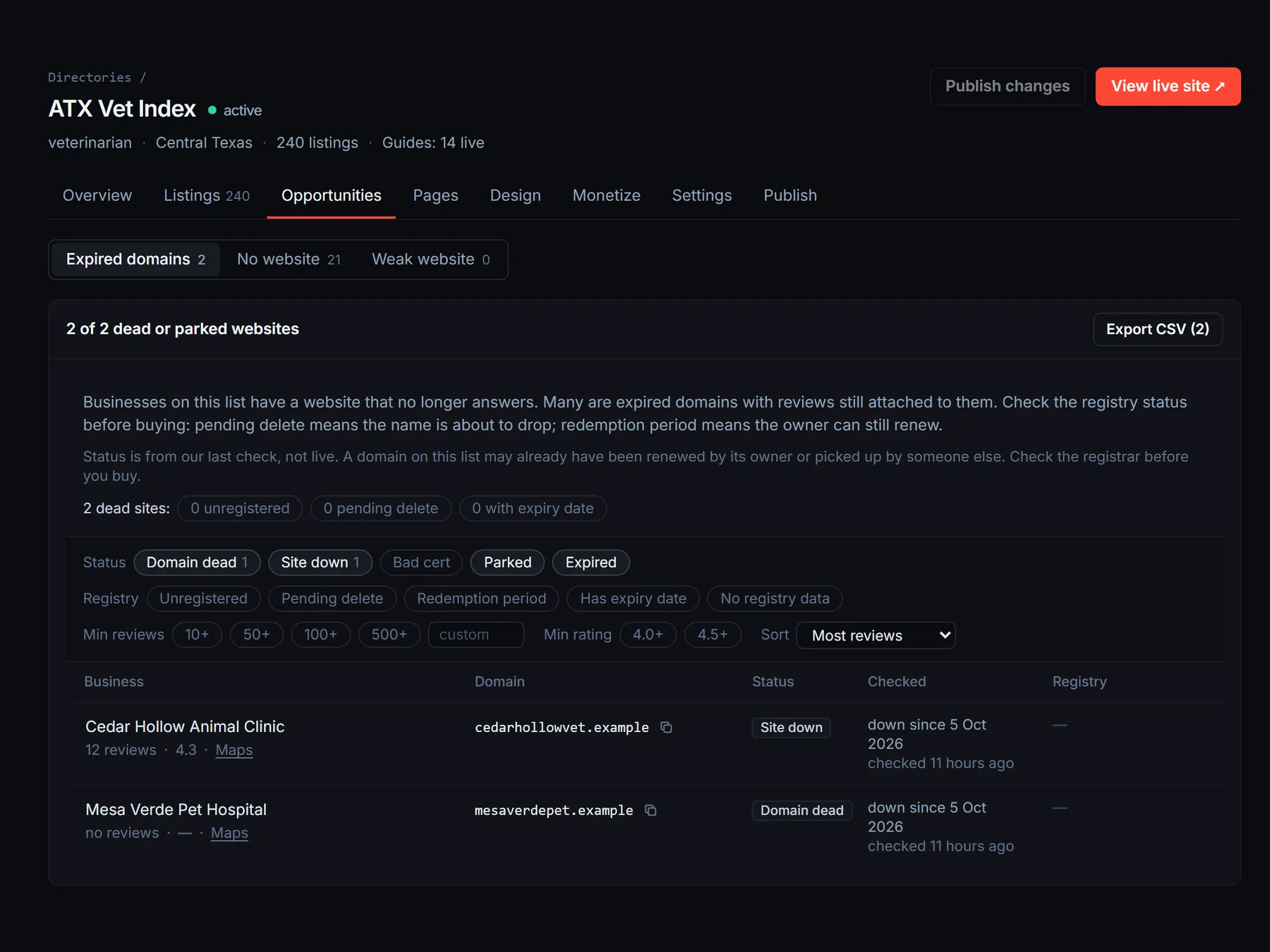
Let Claude or ChatGPT prepare the featured-slot pitch
Your directory knows which businesses it sends calls to. Connect Claude or ChatGPT, ask who to pitch, and get a draft email built on each business's real calls and reviews. You send it from your own inbox.
Ask who to pitch
"Which listings got the most calls last month but aren't featured?"
Get a draft with their numbers
"Our directory sent you 65 calls in August. Here is what a featured slot adds." You read it, edit it and send it from your own inbox.
It remembers
Each draft is logged, so next month's "skip anyone I contacted in 60 days" leaves them out. Businesses that asked you to stop are never suggested.
Also works for renewals (“whose featured slot ends in 14 days?”) and for the Opportunities lists. LocusPilot never contacts anyone for you.
These three got the most calls in August and aren't featured:
Hi, your listing on Austin AC Repair Guide brought you 65 calls and 21 visits to your website last month. A featured slot puts you at the top of the AC repair page...
Your design. Not a template.
A WordPress directory takes weeks of theme and plugin work. AI directory tools hand you a hardcoded template. Here the whole setup is a short form: pick a design, tune colours, typography, shape and homepage layout with a live preview, and the AI generates the niche imagery.
A form, not a project
Niche, place, brand, design. The engine pulls its own data, writes the analysis and deploys the site. Nothing to import, no plugin stack, no theme to fight.
AI images per niche
Hero and page imagery generated for the niche automatically, sized and placed. No stock hunting, no uploads.
No template-farm footprint
Each design pairs its own page layouts and type. An automated design QA gate keeps your directories from looking like siblings of each other.
Eight colour themes plus custom, six type pairings, four shapes. Every choice previews live before you spend a credit.
Every directory tool scrapes. Ours reads.
A WordPress directory takes weeks of theme, plugin and data-import work. AI directory tools pull the data fast, then leave you fighting a hardcoded template. This engine takes a short form and builds everything on top: the analysis, the editorial, and a design that is yours.
| What you get | LocusPilot directory | WordPress + directory theme | AI directory tools |
|---|---|---|---|
| Setup | A short form: niche, city, brand; priced before you build | Weeks of theme, plugin and import work | A short form, then hours fighting the template |
| Review analysis | AI synthesis per business: praise themes, watch-outs, "best for" callouts | Star widgets from a plugin, or nothing | A copied star average |
| Ranking | A published methodology, sentiment weighted heaviest by default, and you can change the weights | Whatever sort you wire up | Sorted by star rating |
| Guides | A buyer-journey guide library written by a named expert author | You write every guide yourself | None |
| Reference | A glossary of the niche and a resources hub of real local organisations | You build them by hand | None |
| Coverage | A calculated-unique page for every city served, thin ones held back | Duplicate templates per location | The same page with the city swapped |
| Design | Design presets, colour themes, typography, page layouts, AI images per niche | Whatever theme you bought | One hardcoded template |
| Freshness | A dated "last verified" on every listing; closed businesses swept each cycle | Manual re-imports | Stale since the scrape |
| AI citation | Entity graph, earned-only ItemList schema, llms.txt, AI crawlers welcomed | Partial plugin schema | No structured data |
| Leads | Lead capture on every listing plus a quote funnel you own | A form plugin, no attribution | Rarely, and unattributed |
| Prospects | Lists businesses with no website, weak websites and expired domains, with phone numbers | None | None |
| AI assistant | Ask Claude or ChatGPT about any listing, draft pitches with real numbers, and log who you contacted | None | None |
| Paid placement | Labelled, capped, and never touches the earned ranking | However you wire it up | Not supported |
Priced per listing, shown up front.
Directories are for subscribers. They run on the same credits as everything else in LocusPilot, and the wizard quotes the exact number before you build.
+ 0.10 credits per listing
The flat 5 covers the full editorial spine. The per-listing part covers the data pull and review analysis.
First directory free, once per account, on any paid plan from $29/mo.
- Methodology, best-of, comparisons, guides, glossary, resources
- Review sentiment synthesis per listing
- Named author, schema, entity graph, llms.txt included
per listing, each refresh cycle
On your cadence: monthly by default, weekly if the niche moves fast, or manual.
- Closed businesses drop, new ones enter
- Sentiment re-synthesised where reviews changed
- A 100-listing directory refreshes for 5 credits
on top of what your plan includes
Building directories needs an active subscription. Your plan includes a number of directories, and on Growth and above you can add more at $2/month each, up to 500 extra. Each directory holds up to 1,000 listings.
- Operator $29/mo · 2 included
- Growth $97/mo · 6 included, add more at $2/mo
- Agency $297/mo · 20 included, add more at $2/mo
- Authority $697/mo · 50 included, add more at $2/mo
Why subscribers only? A directory is not a one-off build. It re-checks listings on a schedule, re-writes sentiment as reviews change, and keeps lead capture and analytics running. That upkeep needs an active plan behind it. One-off PAYG credits cover single websites; a living directory needs the subscription's refresh loop.
Common questions, answered.
Everything you need to know before you start.
Your city has a hundred niches. Pick one.
The directory builder is open on every paid plan. Sign up and run the wizard on a niche you know, with the exact price shown before you spend a credit.