Is Local Lead Generation Legal, and Does It Still Work in 2026?
Local lead generation is legal and still works in 2026, but the rules tightened. What applies, where operators cross the line, and what AI search changed.

You know how every rank-and-rent forum thread eventually lands on the same two questions? Someone asks if local lead generation is even legal, and someone else asks if AI search killed the model.
Both questions deserve real answers, not vague warnings.
Here's the short version. Local lead generation is still legal and still profitable in 2026, but the rules tightened considerably. The Federal Trade Commission, state attorneys general, and the FCC now watch lead generation practices far more closely than they did five years ago.
What changed is the enforcement, and one state law that every legal-vertical operator needs to read closely.
This guide walks through the actual rules that apply, shows exactly where operators cross legal lines, and then breaks down what AI search really did to local rankings, with numbers instead of guesses. Nothing here is legal advice; it's how the rules work in practice.
Key takeaways
- Local lead generation remains legal in 2026 when operators stay transparent, follow FTC guidelines, and clearly disclose their role as lead providers rather than service providers.
- Deep local sites, authentic reviews, and content that answers real questions still generate qualified leads, even as AI search redistributes clicks away from traditional listings.
- Operators cross legal lines through fake listings, posing as licensed professionals, selling duplicate leads as exclusive, and collecting consumer data without consent.
- Regulated trades like law and contracting require the licensed professional to perform the work; lead generators must verify licensing and avoid fee-splitting arrangements.
- The clean operation documents everything: consent, delivery timestamps, and written agreements that make every lead traceable by both sides.
Is local lead generation legal
Yes. Building websites that generate leads and selling those leads to businesses is a legal, long-established business model. Marketplaces like Angi, HomeAdvisor, and Thumbtack operate at massive scale using this exact approach.
The model itself is not the problem. The legal question centers on how you execute it. Misrepresentation, unlicensed referrals in regulated trades, and deceptive practices are where operators cross into illegal territory.
Your compliance obligations depend on two things: the industry you serve and the states where your leads originate.
The regulators you need to know
If you generate legal leads, pay close attention to Colorado. The state's SB 26-174 goes far beyond a data-handling tweak. Per the bill text on the Colorado General Assembly's website, the law takes effect August 12, 2026, and makes paying a third party for potential-client information a deceptive trade practice under the Colorado Consumer Protection Act.

The penalties are real money. Civil penalties run up to $20,000 per violation, rising to $50,000 if the victim is elderly, plus consumer statutory damages of $10,000 per violation. Colorado also passed SB 37, which tightens how businesses collect and use consumer data. If your model depends on selling legal leads to Colorado attorneys, this changes whether that vertical is viable there at all.
Financial leads carry their own rulebook. The Consumer Financial Protection Bureau's Circular 2024-01, published on consumerfinance.gov, warns that compensation-based lead rankings (letting the buyer who pays more appear higher) can violate UDAAP standards for digital intermediaries. Read it before you rank or prioritize financial-services leads by payout.
Beyond those two, a few rule sets apply to almost every operator:
- Consumer protection laws: your landing pages cannot suggest you are a law firm or licensed contractor when you are a lead provider.
- The CAN-SPAM Act: governs how you contact prospects by email.
- State privacy laws: require transparent disclosure about how consumer information is collected and used.
Regulatory compliance means stating clearly what your site does: it connects customers with local service providers. Operators who keep that separation clear stay on the right side of the law. Those who blur it face cease-and-desist orders, fines, and shutdown.
The rules that actually apply
Three rule sets cover most of what an operator touches: Google's platform rules, consumer protection and lead transparency, and licensing in regulated trades.
Google guidelines and business profiles
Google's rules for Business Profiles are straightforward. The platform prohibits fake listings, fabricated addresses, and keyword-stuffed business names. A profile must represent a legitimate business operating at the stated location.
That enforcement is not theoretical. Per 2026 reporting from Birdeye's Google Business Profile guidelines update and others, Google ran a major enforcement sweep in spring 2026: flagged profiles saw fake content removed, new reviews paused, and public warning banners displayed, with retroactive review sweeps expanding globally through May and June.
The key distinction: an organic lead generation website that ranks through legitimate content breaks no Google rule at all. Problems come from fabricated GBP listings for businesses that do not exist at that location. Organic-first operators can run entirely without a GBP and stay fully compliant, capturing leads through search placement instead of profile data.
Consumer protection and lead transparency
The FTC acts against deceptive lead generation: fake reviews, false claims about a business, bait advertising. Selling a consumer inquiry to a service business is legal. The violation happens when you deceive the consumer about who they will contact or what they will receive.
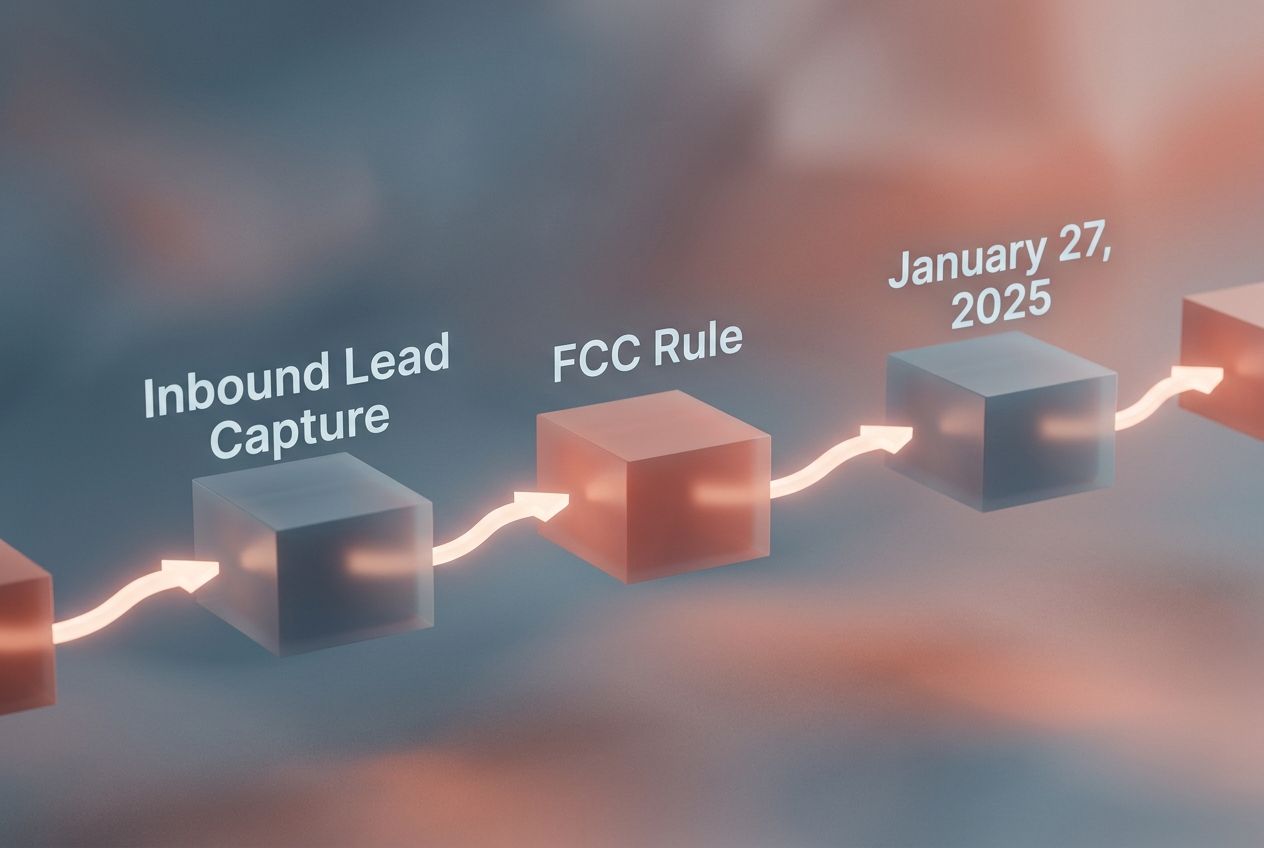
Inbound lead capture is the clean lane because the customer initiates contact. The TCPA governs outbound calling and robocalls, so unsolicited outbound generation carries compliance risk that inbound inquiries sidestep entirely.
The consent rules for outbound contact keep tightening. The FCC adopted a one-to-one consent rule ending the old practice where one consumer consent covered dozens of unrelated sellers; the rule has been fought over in court since, but the direction is unmistakable, and separate named-seller consent is now the industry-safe standard either way. That single trend is the strongest argument for inbound-only capture in 2026.
The habits that keep this side clean:
- Document how each lead arrived, with timestamps and source.
- Keep every claim on the landing page truthful and matched to what the consumer actually receives.
- Disclose how contact information is collected and used.
- Handle reviews honestly: respond to negative ones, report fake ones to the platform, never manufacture them.
Licensing in regulated trades
Regulated trades come with one critical distinction: the professional performing the work must hold the license, not you. This applies across contracting, legal services, medical practices, and some home services depending on the state.
You can safely run the model by connecting customers with licensed providers. Your exposure jumps when website copy implies your platform delivers the licensed service itself. Describing the site as a connector between customers and local professionals protects you far more than claiming to provide the service.
Fee-splitting restrictions create the sharpest risk, particularly with legal leads. State bar associations prohibit attorneys from paying referral fees that violate professional conduct rules, so arrangements with law firms require careful structuring, and Colorado's SB 26-174 hardens that vertical further.
The practical guidance: avoid regulated professions as a first niche unless you know the local licensing requirements cold. Target trades where the licensed party operates independently and you deliver qualified inquiries. That keeps the operation clean and positions it as a referral service, not an unlicensed practitioner.
Where operators cross the line
The model stays legal when you operate with transparency, but crossing into trouble happens fast once deception enters the picture.
Misrepresenting local presence on Google Business Profiles is the most common violation. You cannot list a virtual address as a physical office or claim a brick-and-mortar presence where you operate only as a referral service.
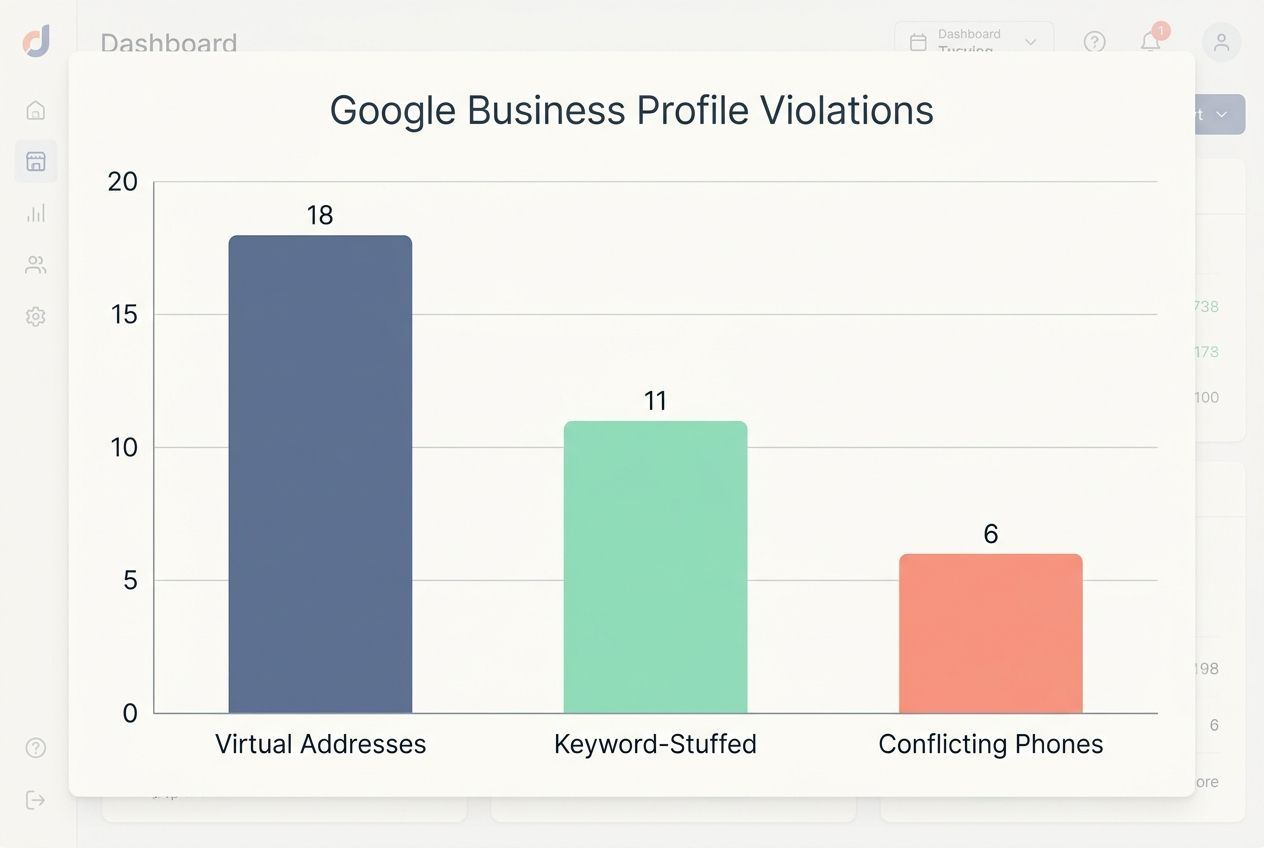
Automated enforcement catches this at scale. A recent review of 60 GBP entries tied to rank-and-rent sites found 18 used virtual addresses, 11 had keyword-stuffed business names, and 6 carried conflicting phone numbers across platforms. Nearly a third showed signals that trigger automated verification flags, leading to suspensions that kill lead flow overnight. The clean alternative is simple: run organic-first, and only attach a GBP where a real business operates at a real location.
Duplicate lead sales are the other trust killer. Selling the same lead to multiple buyers while marketing it as exclusive deceives clients, and buyers figure it out fast when they compete for the same prospect.
In a recent analysis of 40 lead buyer complaints, 29 referenced receiving leads sold to multiple buyers. Buyers reported an average of 18 percent lower conversion rates on duplicated leads versus exclusive leads. Duplicate lead sales, not ad performance, were the top cause of churn in the sample group.
Long-term revenue depends on single-buyer exclusivity per market, stated explicitly in your contracts.
The rest of the line-crossing list, each with its clean alternative:
- Fake reviews destroy credibility and draw active FTC enforcement. Earn real ones through the renter's actual customers.
- Unsubstantiated expertise claims (fake awards, credentials) trigger action in regulated industries. Let documented lead delivery be the credential.
- Data collection without consent violates state privacy laws. Disclose plainly and log the consent.
- Posing as the service provider where consumers would be deceived. Describe the site as connecting customers with local providers.
Does local lead generation still work in 2026
AI search and Google's ranking updates eliminated the shortcuts that once made rank-and-rent effortless. What died: thin doorway sites, mass-produced duplicate content across cities, and fake-GBP map spam. What survived is the version of the model that was always defensible: genuinely deep local sites that are the best answer in their niche and city.
That shift raised the floor, and it favors operators willing to build real assets over shortcut hunters.
What AI search changed
Search engines now answer many local queries directly through AI Overviews and assistants, which redistributes clicks away from traditional listings.
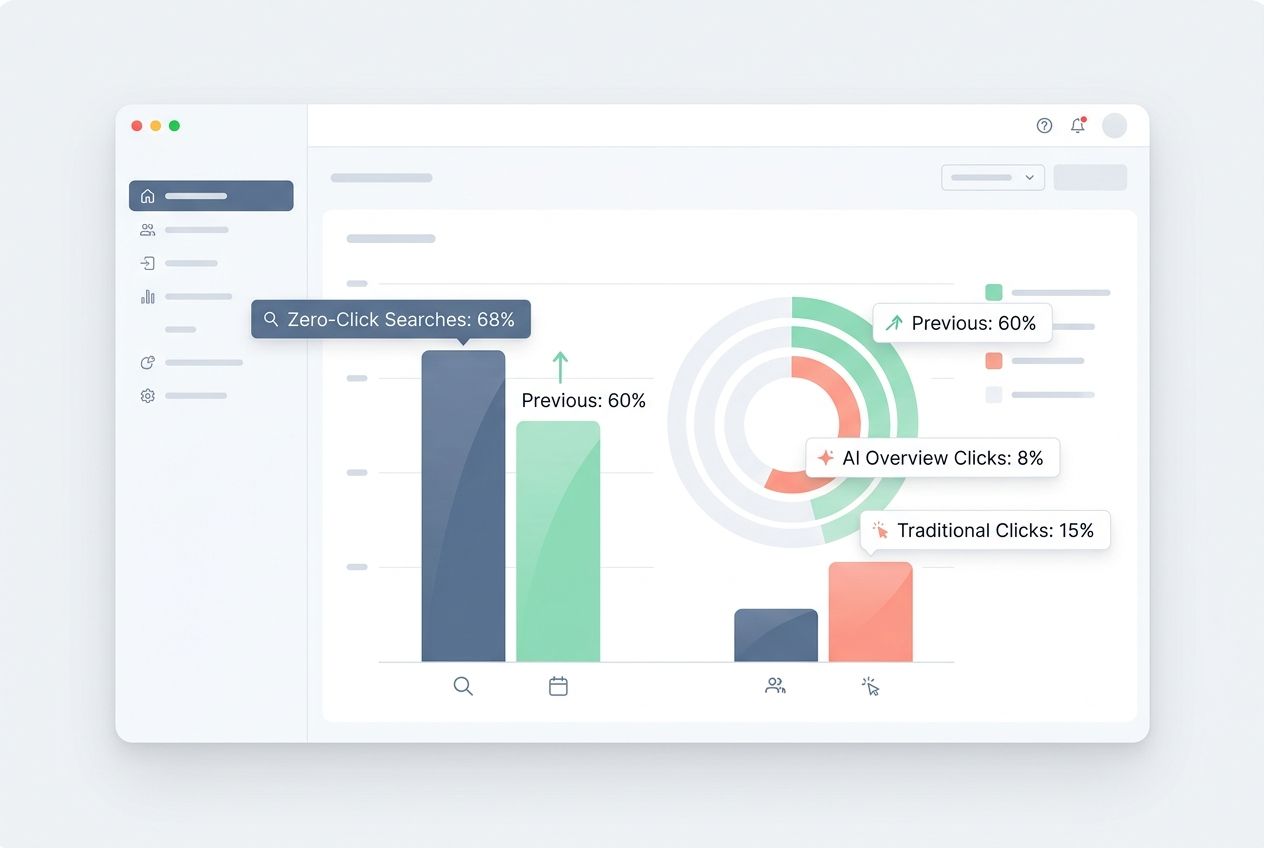
The numbers make the shift concrete. SparkToro's zero-click analysis puts roughly 68 percent of US Google queries ending without a click in early 2026, up from about 60 percent two years earlier. Pew Research Center found that when an AI Overview appears, users click a traditional result only 8 percent of the time, versus 15 percent without one.
That's why being citable by AI engines is now a ranking surface alongside classic SEO. Machine-readable structure, proper schema, and content that answers questions directly determine whether an assistant recommends the site when someone asks "who should I call." The AI Agent Ready guide covers the technical side, and Vibe SEO covers how the whole stack fits together.
Here's the upside operators miss in the doom threads: zero-click results reduce raw traffic, but the searcher who does click or call carries higher intent and converts more readily. The model shifts from capturing broad volume to capturing qualified prospects, which is the part that was always worth money.
What still ranks and why
You rank now by building real depth in one niche and one city: full topic coverage, content that answers the specific questions locals search for, fast static pages, and freshness. Competitors who chase shortcuts leave exactly those gaps.

One case shows how this plays out under AI search pressure. A single-city legal lead site published 46 long-form question-and-answer pages plus profile schema. After AI Overviews began redirecting volume, the site lost 52 percent of low-intent sessions but kept a stable 73 percent of higher-intent contact events month over month. Contacts dropped far less than traffic did. AI search rewards depth over breadth, and preserves conversions for sites built for both human and machine readers. Competitive content optimization is how you close those depth gaps deliberately.
The boring work wins: consistent information everywhere, messaging matched to search intent, tracked lead delivery that proves value to the renter in real numbers month after month. The model works in 2026 because most operators abandoned the fundamentals, leaving room to win with basic discipline.
The clean operator playbook
The compliance framework in one list. Each item keeps you on the right side of a rule covered above:
- Maintain real business information for every renter, so no listing or page ever reads as a fake front.
- Use a transparent delivery system both sides can see: every lead logged, timestamped, and traceable from capture to renter inbox.
- Capture leads inbound only. The customer initiates contact, which sidesteps the outbound consent rules entirely.
- Never create fake listings or reviews. Both draw platform enforcement and FTC attention.
- Verify licenses in regulated trades before renting to a business, and stay out of fee-splitting arrangements.
- Sell each lead exclusively, once, to one renter per market, and put exclusivity in the contract.
- Keep written agreements covering lead ownership, delivery timelines, and expectations, so disputes have a document instead of a memory.
- Document consent and retention: timestamped consent on the landing page, source logged per inquiry, records kept for three years.
A documented handoff pays for itself quickly. In test scenarios, a tracked lead trail with delivery timestamps cut dispute-resolution time by more than half, because both parties could verify exactly when and how each lead transferred.
Conclusion
Local lead generation operates within clear legal boundaries when you follow the platform rules, respect consumer protection standards, and stay transparent about what your sites do. The 2026 changes reward exactly the operators who build real assets: the enforcement sweeps and AI search shift cleared out the shortcut crowd and left the fundamentals standing.
Watch the regulated verticals closely, especially legal leads in states like Colorado where the rules are hardening fast.
If you're starting from zero, the step-by-step startup guide maps the sequence, and the economics breakdown shows whether the numbers work before you commit.
FAQs
Is local lead generation legal in 2026?
Yes. Generating and selling local service leads is a legal business model when you disclose your role, capture leads inbound with documented consent, and stay truthful about the businesses you connect customers with. The enforcement risk sits in deceptive execution, not the model.
Which states or verticals need extra caution?
Legal leads in Colorado top the list: SB 26-174 makes paying third parties for potential-client information a deceptive trade practice from August 2026, with penalties up to $20,000 per violation. Financial services leads sit under CFPB scrutiny, and any regulated trade adds licensing and referral-fee rules on top of the baseline.
Does local lead generation still work in 2026?
Yes, and demand keeps growing, because local businesses still need customers regardless of how search results are rendered. What changed is the bar: thin sites and map spam are gone, and deep, machine-readable local sites that AI engines cite are winning the redistributed clicks.
What challenges should operators expect this year?
Tighter consent rules around any outbound contact, platform enforcement sweeps on business profiles, and less raw organic traffic as AI answers more queries directly. All three push the same direction: inbound capture, real assets, and documented lead delivery, which is the clean operation described above.
Ready to build a rank-ready site?
Get 30+ pages, auto-applied images, and full SEO setup in minutes.
Get started