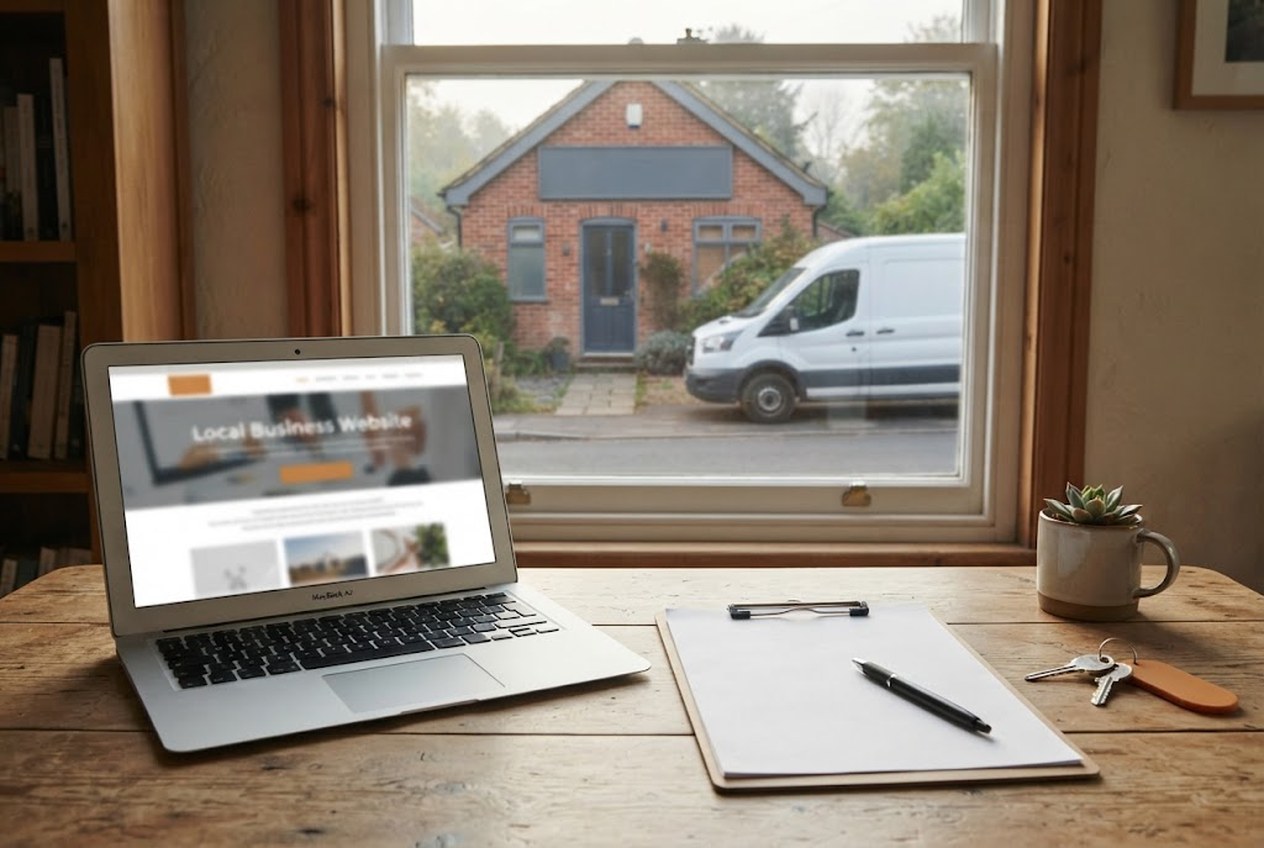
How Many Pages Does a Local Business Website Really Need?
The 5-page website myth is costing local businesses rankings. Learn why 10-80+ pages give you more opportunities to rank in local search results.
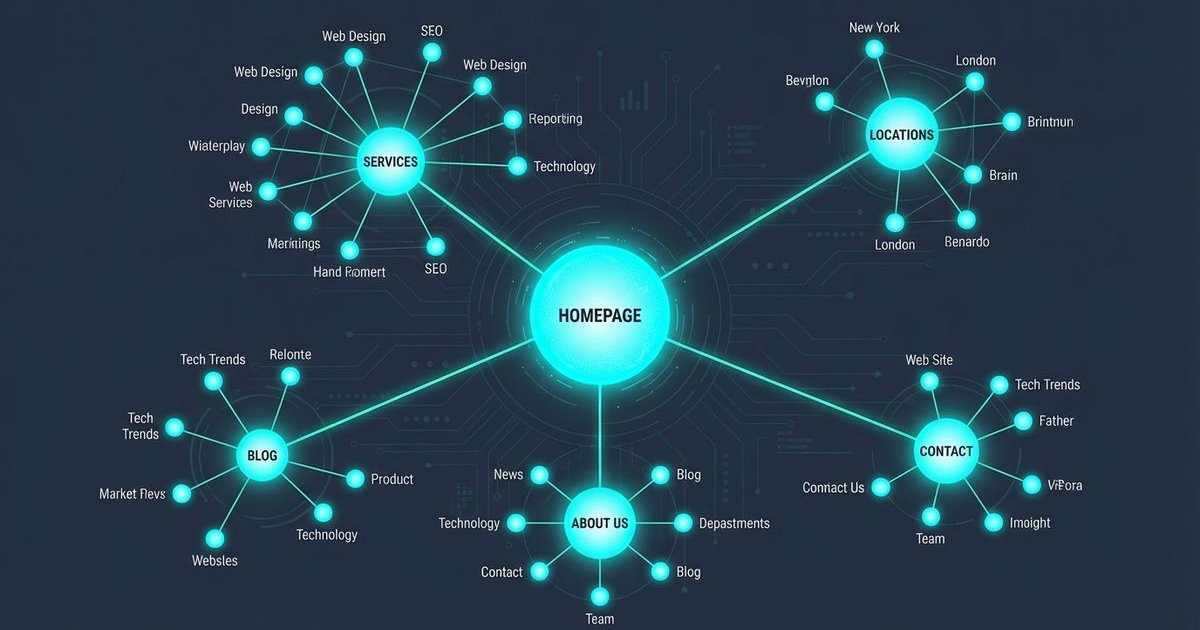
"You just need a simple 5-page website."
We hear this advice given to business owners across the US every single day. The results are almost always disappointing.
This approach has cost local businesses countless rankings on Google. It leaves them invisible to customers in their own neighborhoods.
We are going to explain why the 5-page website is an SEO myth. You will see exactly what is required to compete in the current local market.
The 5-Page Website Myth
The traditional small business website usually looks the same. It includes:
- Home
- About Us
- Services
- Contact Us
- Maybe a blog post or two
This structure is clean. It appears professional to the human eye.
But it is fundamentally insufficient for local SEO in the United States.
Why 5 Pages Aren't Enough
Google ranks pages, not websites. Each page you publish is a single ticket in the lottery for specific keywords.
We know that with only 5 pages, you only hold 5 tickets.
Your competitors in Dallas, Chicago, or Atlanta with 30+ pages hold 30+ tickets. They simply have more chances to win.
This isn't speculation. Recent industry data shows that long-tail keywords make up 70% of all search traffic. These are the specific, problem-focused searches like "emergency furnace repair cost" rather than just "heating repair."
A 5-page site misses that entire 70% of the market because it lacks the depth to answer those specific questions.
The Anatomy of a Rank-Ready Local Site
A comprehensive local business website in 2026 needs more than just the basics. It requires a structure built for search engines and customers alike.
Core Pages (5-8 pages)
These are the foundation of your digital presence.
- Home: Targets your primary keyword (e.g., "Plumber in Dallas").
- About: Establishes trust and tells your brand story.
- Contact: Includes NAP (Name, Address, Phone), Google Maps embed, and hours.
- Services Overview: A menu or pillar page listing all offerings.
- Testimonials/Reviews: Collects social proof from verified customers.
- FAQ: Captures question-based searches relevant to local concerns.
- Privacy Policy: Critical for compliance with laws like the CCPA (California) or general data protection standards.
- Accessibility Statement: Essential for ADA (Americans with Disabilities Act) compliance to mitigate lawsuit risks.
Individual Service Pages (5-20+ pages)
We cannot stress this enough: every service deserves its own page. Do not lump them all onto a single "Services" page.
Example for a US HVAC company:- /services/ac-installation/
- /services/furnace-repair/
- /services/duct-cleaning/
- /services/emergency-hvac-repair/
- /services/heat-pump-maintenance/
- /services/smart-thermostat-installation/
- /services/commercial-refrigeration/
- /services/mini-split-systems/
- /services/indoor-air-quality/
- /services/hvac-tune-up/
Each page targets specific keywords that customers actually type into Google. "Furnace repair cost" and "install Lennox AC" are different searches with different intents.
Location Pages (5-50+ pages)
If you serve a metro area like DFW or the Bay Area, each specific city or suburb needs its own page.
We use this strategy to capture hyper-local traffic that generic "city-wide" pages miss.
Example for a renovation contractor serving the Dallas-Fort Worth area:- /locations/dallas/
- /locations/plano/
- /locations/frisco/
- /locations/irving/
- /locations/fort-worth/
- /locations/arlington/
- /locations/richardson/
- /locations/mckinney/
- /locations/garland/
- /locations/grapevine/
Each page must include unique value.
- Location-specific project descriptions.
- Local landmarks (e.g., "Serving neighborhoods near White Rock Lake").
- Service availability specific to that zip code.
- Local testimonials from neighbors in that area.
- Embedded Google Map for that specific service area.
Blog Posts (10-30+ pages)
Blog content builds authority and captures long-tail searches.
Content types that work well in the US market:- How-to guides: "How to reset your circuit breaker safely."
- Cost guides: "Average cost of a kitchen remodel in 2026."
- Comparison content: "Heat Pump vs. Furnace: Which is better for Texas winters?"
- Seasonal content: "Preparing your pipes for a freeze."
- Local content: "Best drought-tolerant plants for Arizona front yards."
Every blog post creates another entry point for a potential customer to find you.
Resource Pages (3-10 pages)
Interactive tools provide immense value and earn backlinks from other local sites.
- Calculators: "Roofing Cost Estimator" or "Energy Savings Calculator."
- Checklists: "New Homeowner Maintenance Checklist."
- Buying guides: "2026 Guide to Energy Star Appliances."
- Video libraries: Tutorials on basic maintenance.
- Downloadable resources: PDF guides or permit application templates.
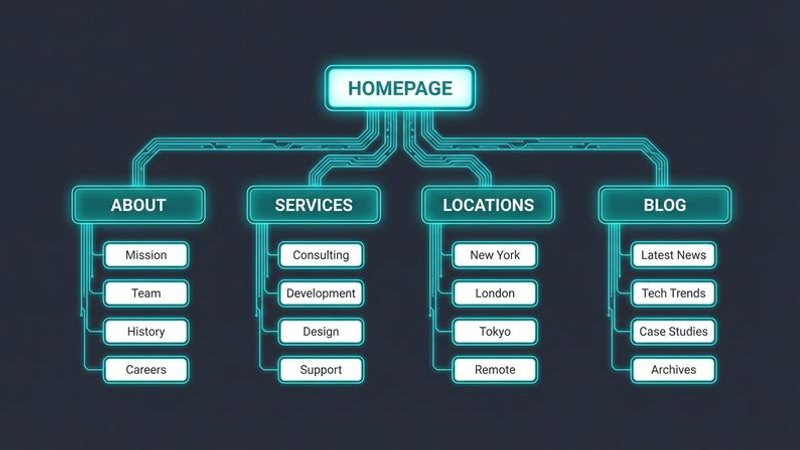
The Math: Pages × Keywords × Opportunities
Let's look at the numbers to see why size matters.
5-Page Website
- 5 pages targeting maybe 10-15 keywords.
- Limited internal linking opportunities.
- No signals of depth to Google.
- Very hard to compete for "short tail" terms like "Plumber Dallas."
50-Page Website
- 50 pages targeting 100-200+ keywords.
- Rich internal linking structure.
- Strong signals that you are an authority.
- Targets both broad terms and specific, less competitive questions.
Real-World Impact
Consider these estimated monthly search volumes for a home service business in a major US metro:
| Search Term | Est. Monthly Searches | Difficulty |
|---|---|---|
| "plumber dallas" | 6,400 | High |
| "water heater repair" | 2,100 | Medium |
| "emergency plumber near me" | 8,800 | High |
| "tankless water heater cost" | 540 | Low |
| "fix leaky faucet handle" | 320 | Low |
| "drain cleaning special" | 170 | Low |
We have seen 50-page websites target all of them. They also capture dozens of variations like "cost to replace garbage disposal" or "plumbing permit requirements."
Building Topical Authority
Google's algorithms reward sites that cover a topic completely. A website that thoroughly explains a subject is seen as more authoritative than one with thin content.
What Topical Authority Looks Like
Shallow site (low authority):One "Services" page with a bulleted list of everything you do.
Deep site (high authority):- Pillar page explaining the service category.
- Individual pages for each specific service (e.g., Installation, Repair, Maintenance).
- Supporting blog content answering common questions.
- FAQ pages addressing specific local concerns (pricing, permits, insurance).
- Resource pages with tools and guides.
The deep site tells Google a clear story. It says, "This business is the comprehensive resource for this topic in this region."
How to Create 50+ Pages Without Writing Novels
The objection is obvious. "I don't have time to write 50 pages of content."
You have three options to solve this.
Option 1: Hire Writers
- Professional copywriters in the US charge $150-$300 per page for decent quality.
- 50 pages = $7,500 - $15,000.
- Takes weeks or months to brief, review, and approve.
- Quality varies significantly between freelancers found on platforms like Upwork.
Option 2: Write It Yourself
- Requires working nights and weekends for months.
- Consistency is incredibly difficult to maintain.
- SEO optimization requires technical skill you may not have.
- Most business owners abandon the project after page 8.
Option 3: AI Generation
- LocusPilot generates 10-80+ pages automatically.
- AI researches your niche and local competitors.
- Content is unique and optimized for search engines.
- The work is completed in hours instead of months.
We believe the economics of Option 3 make the first two options hard to justify for local small businesses.

Internal Linking: The Hidden Multiplier
More pages enable more internal links. These links are the highways of your website.
- Pass PageRank: Distributes authority between your pages.
- Discovery: Helps Google find and index new content faster.
- Topical Clusters: Groups related content to boost authority.
- User Experience: Guides visitors to the exact answer they need.
Internal Linking Structure
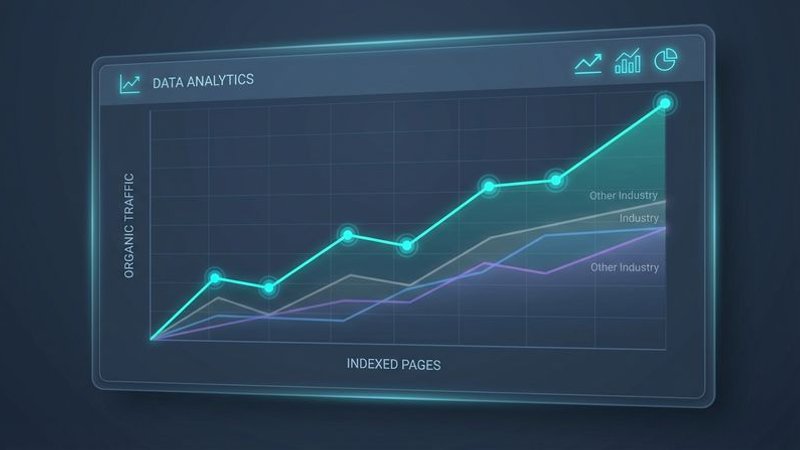
A well-structured 50-page site creates a spiderweb of relevance.
- Homepage links to all main service categories.
- Service category pages link to individual services (e.g., "HVAC" links to "Furnace Repair").
- Service pages link to related services.
- Blog posts link to relevant service pages (e.g., "Why is my AC leaking" links to "Repair Service").
- Location pages link to the specific services available in that town.
This creates a density of information that a 5-page site cannot replicate.
Quality vs. Quantity: The False Dichotomy
"But shouldn't I focus on quality over quantity?"
This is a false choice. You absolutely need both.
- 5 excellent pages will lose to 50 good pages in traffic volume.
- 50 terrible pages will lose to 5 excellent pages in conversion.
- 50 good-to-excellent pages will outrank both.
Our goal is comprehensive quality at scale. You should not have to choose between depth and breadth.
The Minimum Viable Page Count
If you are starting from scratch in the US market, here is a realistic target.
Essential (20-30 pages)
- 5-8 core pages (including Privacy & Accessibility).
- 8-12 service pages.
- 5-10 blog posts.
Competitive (40-60 pages)
- 5-8 core pages.
- 8-12 service pages.
- 10-20 location pages (Covering key metro districts).
- 15-20 blog posts.
Dominant (80+ pages)
- 8+ core pages.
- 15-20 service pages.
- 20-30 location pages.
- 30+ blog posts.
- Resource and tool pages.
Implementation: Getting to 50+ Pages
If you have a 5-page website today, here is a practical path forward.
You can also skip steps 1-5 and generate a comprehensive site structure using AI tools from day one.
The Bottom Line
The question isn't whether more pages help your SEO. We know they do.
The real question is how you are going to create them efficiently.
For US businesses competing in search results, a 5-page website is like bringing a knife to a gunfight. Your competitors with 50+ pages have more ranking opportunities, stronger topical authority, and better internal linking.
We see only three reasons for sticking with a 5-page website in 2026:
- Lack of awareness (which you no longer have).
- Budget constraints (AI generation solves this).
- Time constraints (AI generation creates pages in hours).
None of these excuses hold up anymore. Build more pages. Rank for more keywords. Win more customers.
Ready to build a rank-ready site?
Get 30+ pages, auto-applied images, and full SEO setup in minutes.
Get started